 Jesse Livermore
· 4 min read
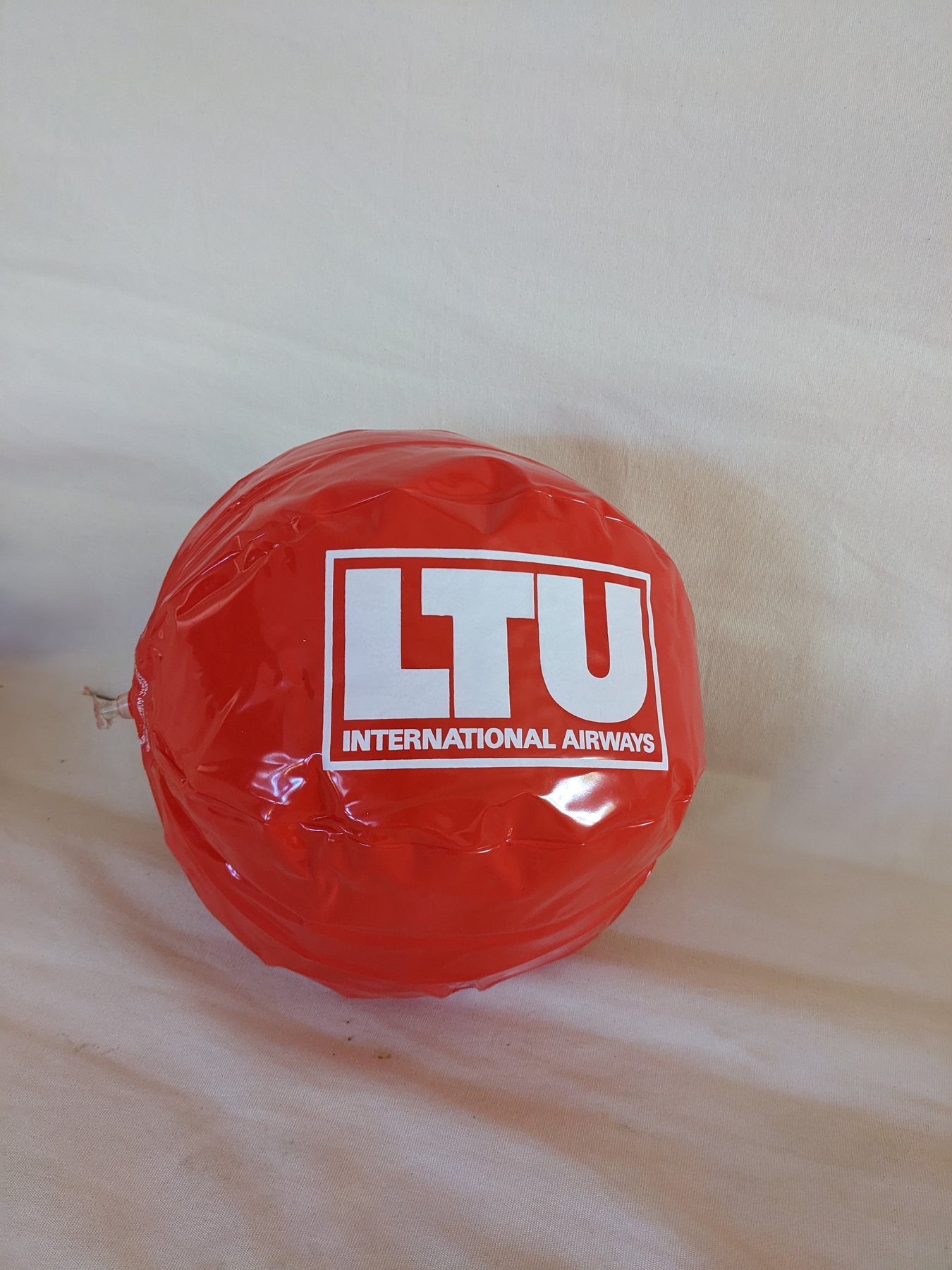
LTU International Airways (LuftTransportUnternehmen)
Gifted to the Portfolio in 2021
Collecting the worthless, one charter airline at a time.
Let us be clear up front: LTU was not a fraud. There were no biological assets in a Chinese forest, no missing €1.9bn in a Philippine trustee account, no founder live-streaming with a hunting rifle. LTU was that rarest of museum pieces – an honest, boring, low-margin business that simply could not stop killing the people who bought it.
Founded in 1955 as Lufttransport Union and flying Vickers Vikings out of Frankfurt (first commercial flight: Frankfurt–Catania, March 1956), LTU soon renamed itself Lufttransport-Unternehmen, moved to Düsseldorf in 1961 and spent decades doing one thing well: ferrying pale Germans to Mallorca and returning them slightly less pale. A perfectly respectable Pauschalurlaub machine. In 1991 it even bought four McDonnell Douglas MD-11s – the only German passenger operator ever to fly the type – and then, in 1998, handed them to Swissair. A foreshadowing gift, rather like leaving your car keys to someone you secretly dislike.
Because the interesting part of LTU is not the airline. It is the body count of its owners.
Owner No. 1: WestLB. The Düsseldorf Landesbank bought roughly a third of LTU in 1989 and, in what may be the single most lucid decision in this entire story, was out of the shareholder register by 2000, when the founding Conle family also left and the retailer Rewe and Swissair took over. (Do not worry about WestLB – it found other, far more creative ways to destroy itself. See the neighbouring exhibit.)
Owner No. 2: Swissair. Fresh from a McKinsey-designed expansion plan – the so-called “hunter strategy”: buy stakes in second-tier European airlines instead of joining an alliance – Swissair took 49.9% of LTU in 1998. Its own chief later admitted that LTU’s problems had not been fully understood at the time of purchase, which is a polite way of saying nobody had looked. LTU lost close to SFr 200 million in 1999, and Swissair was contractually on the hook for a SFr 115 million restructuring. In 2000 LTU alone lost some SFr 340 million, and the foreign airline stakes in total knocked SFr 3.7 billion off the group’s result – a net loss of SFr 2.9 billion, the worst in the company’s history. On 2 October 2001 Swissair simply ran out of money in mid-air – the infamous Grounding – its fleet stranded on tarmacs because suppliers wanted cash and UBS would not extend the credit line. A national institution, gone; the last flight landed in Zurich on 1 April 2002. Swissair’s administrators sold the LTU stake to Rewe in November 2001 for exactly one euro.
At this point a rational asset would have taken the hint.
Interlude: the investors. In 2006 the aviation entrepreneur Hans Rudolf Wöhrl and his partner Jürgen Marbach picked up the shares. They hold the distinction of being the only owners in this story who sold before anything terrible happened to them. Remarkable.
Owner No. 3: Air Berlin. In March 2007 it paid €140 million in cash for LTU (around €340 million including assumed debt), proudly proclaiming Europe’s fourth-largest airline group. By 2009 the LTU brand was quietly being retired; the last flight under the LTU callsign limped from Montreal to Düsseldorf on 13 October 2009, already wearing Air Berlin paint, like a hostage in someone else’s clothes. In April 2011 the operating licence was folded into Air Berlin’s and the company was formally dissolved. (Air Berlin’s own funeral has its own exhibit. Spoiler: it is not a happy one.)
Tally it up. WestLB sold out – and collapsed anyway in 2012. Swissair bought in – and died in 2001. Air Berlin bought in – and died in 2017. Three of the proudest names in Central European finance and aviation, and the one thing they share is a charter airline from Düsseldorf.
The emotional short. You cannot really short LTU – it never had a famous, freely traded share. So we propose a better trade: short whoever currently owns LTU. Held continuously, that position compounded at roughly minus everything. The exquisite final detail is that the planes were fine. Many ex-LTU airframes flew on happily for other carriers for years. Only the balance sheets died. The aircraft were innocent. The owners were not.
Museum note: the curators have no LTU shares to offer, but we are told that a one-euro coin, suitably framed, makes a historically accurate substitute.
https://en.wikipedia.org/wiki/LTU_International
Further reading
- Wikipedia – LTU International (ongoing)
- Wikipedia (German) – LTU International Airways, incl. ownership history (ongoing)
- Wikipedia – Swissair and the “hunter strategy” (ongoing)
- Swissinfo – SAirGroup blames foreign holdings for massive losses (2001)
- Swissinfo – SAir Group counting the cost of involvement in LTU (2000)
- Swissinfo – Swissair to sell LTU stake for one euro (2001)
- Wikipedia – Air Berlin (ongoing)


