 Jesse Livermore
· 4 min read
Air Berlin: grounded
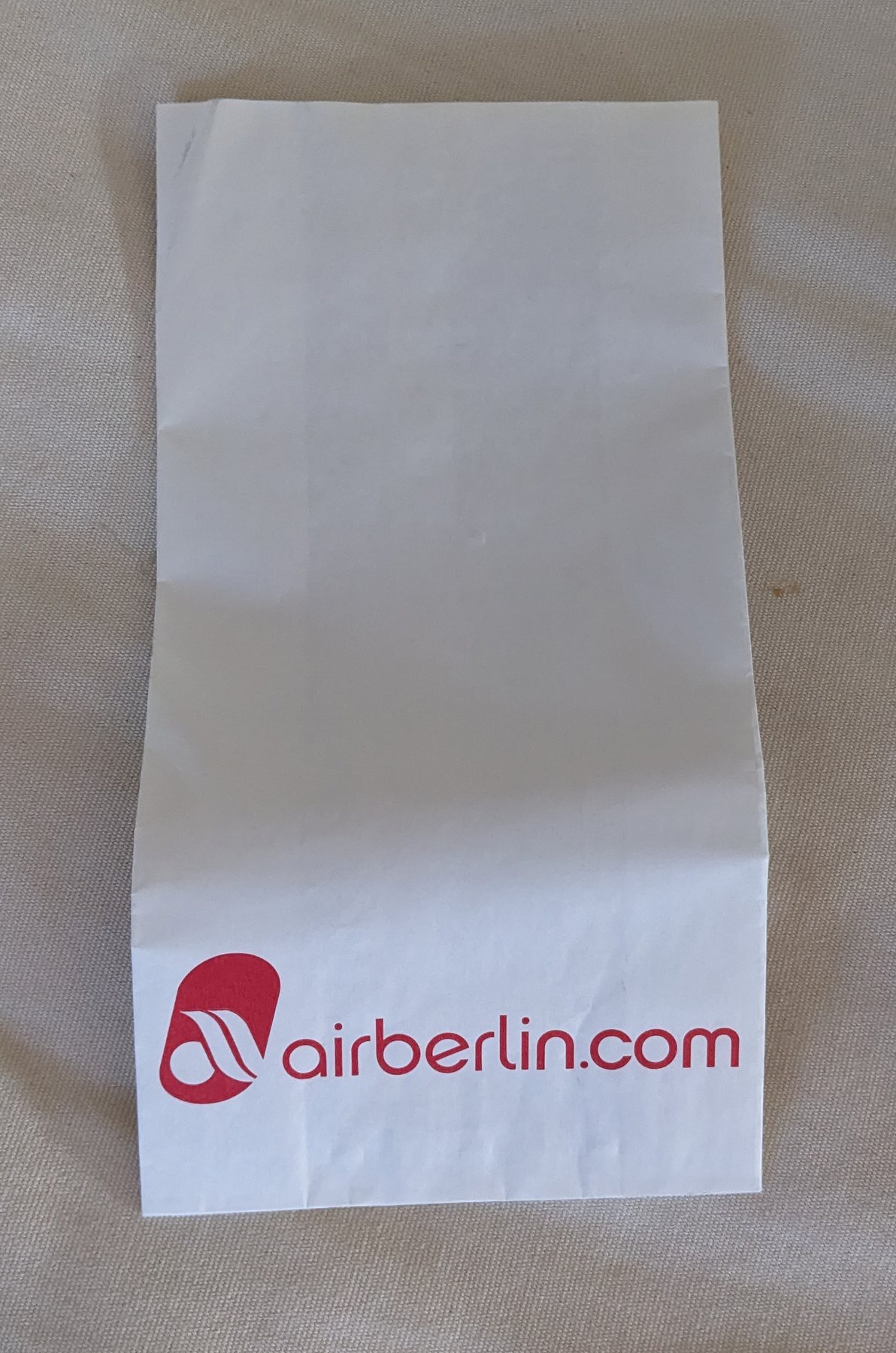
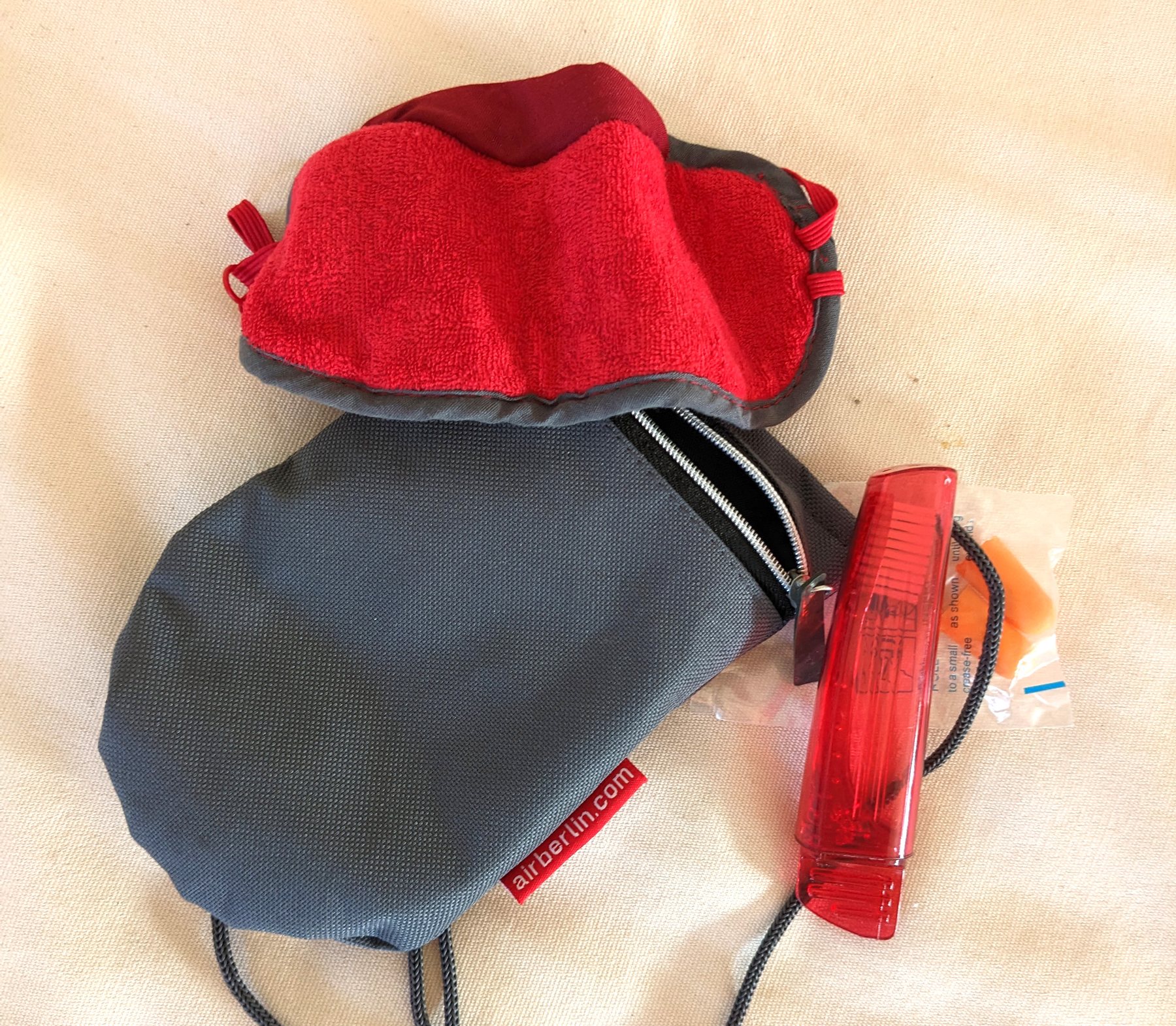
Puke Bag; Amenity Kit; Gifted in 2020/2021.
Air Berlin was Germany’s would-be number two, run for two decades by Joachim Hunold – who, in a detail you genuinely could not invent, had been sales and marketing director at LTU. Yes. That LTU. The cursed one from the neighbouring exhibit. He would later buy it. Do stay with us.
The company itself began life in 1978 as Air Berlin Inc., a charter outfit registered in Oregon by the American Kim Lundgren and flying out of West Berlin, back when Allied rules kept German airlines out of the divided city. Hunold bought it in 1991 and spent the next twenty years turning a holiday charter into a national carrier – or at least into something that looked like one from the departure lounge.
The original sin was strategic indecision dressed up as ambition. Air Berlin tried to be a low-cost carrier and a full-service network airline and a charter holiday line, all at once. In aviation this is technically known as operating three loss-making airlines while wearing one trench coat (and yes – naked under that trench coat).
The IPO, May 2006. The market delivered its verdict early and without mercy: the float was postponed by a week, the price range slashed from as much as €17.50 down to €11.50–14.50, and the shares opened at €12. For a self-styled growth story, investors paid roughly the price of a sad airport sandwich – and still felt overcharged.
Not even Johannes B. Kerner could help.
2006–2007: the shopping spree. Flush with IPO cash, Air Berlin went shopping: dba in 2006, LTU in 2007 (€140 million plus debt), and a growing stake in Niki Lauda’s Austrian airline. It was now genuinely large – 35 million passengers at the 2011 peak. It was not, at any identifiable point, sustainably profitable. The losses grew with the fleet: a then-record €446 million in 2015 on €4 billion of revenue, topped by €782 million in 2016, with financial debt of roughly €1.2 billion on the books. The business model was, in essence, a wood-chipper for equity.
The Hunold magazine years. Like all great capital allocators, Hunold chose to express himself through editorials in the airline’s magazine. In 2008 he used the platform to lecture the Balearic regional government about its promotion of Catalan – an airline that lived off Mallorca picking a public fight with Mallorca, which duly earned it calls for a boycott – and to share his views on biofuels and climate policy, lamenting that wheat was being burned for heating while half the world went hungry. Visionary material to digest at 11,000 metres with a €4 beer.
The Abu Dhabi rescue. Hunold stepped down in 2011, starting a procession of successors (Hartmut Mehdorn, Wolfgang Prock-Schauer, Stefan Pichler, Thomas Winkelmann). Enter Etihad, which raised its stake to 29% in December 2011 and strapped Air Berlin into its “equity alliance” – a constellation of part-owned carriers including Alitalia, Air Serbia and Virgin Australia, now studied chiefly as a cautionary tale. In December 2015 a German court ruled that 31 of 83 Etihad–Air Berlin codeshare routes had to stop. Etihad nonetheless kept lending hundreds of millions into 2017 – and then, at last showing sound judgement, withdrew its support.
15 August 2017: insolvency. The German government kept the aircraft aloft with a €150 million KfW bridge loan so that stranded holidaymakers could actually get home (most of it, to everyone’s surprise, was later repaid). Lufthansa paid around €210 million for aircraft and staff, easyJet €40 million for a slice of the Tegel operation. The Austrian offshoot Niki – founded by Niki Lauda, then sold to Air Berlin by Niki Lauda – went bust in December 2017, whereupon Niki Lauda bought it back and later sold it on to Ryanair. Because of course he did.
27 October 2017: the last flight. Munich to Berlin-Tegel, finishing with one slow, honorary loop around the Tegel tower. It was, by every account, genuinely moving – which is more than the income statement ever managed in eleven years of trying.
Air Berlin – €12 to €0 in eleven years, the scenic route to zero.
The emotional short. From €12 at listing to worthless: about minus 99%. Eleven years, billions of other people’s money, a procession of CEOs, one Abu Dhabi sugar daddy, and a founder who came from LTU, bought LTU, and then followed LTU straight into this very museum. The curse, you will have noticed, is nothing if not consistent.
Museum note: the puke bag is the only Air Berlin product that ever performed exactly as advertised.
(The Kapitalmarkthygienemuseum is hunting for an Air Berlin Topbonus card, a slice of the final-flight memorabilia, or one of those red tailfins. Enquire within.)
Further reading
- Wikipedia – Air Berlin (ongoing)
- Aerotelegraph – Die desolate Lage von Air Berlin in Zahlen (2017)
- Tagesspiegel – Air Berlin zahlt Bundesdarlehen fast komplett zurück (2019)
- Wikipedia – Etihad Airways Partners (the equity alliance) (ongoing)
- Wikipedia – Niki (airline) (ongoing)
- 3Cat – Air Berlin’s chief protests against Catalan in the Balearics (Catalan) (2008)
- Tagesspiegel – Air Berlin: vor 30 Jahren abgehoben (2009)
- Wikipedia – LTU International (ongoing)


