 Jesse Livermore
· 3 min read
The Great Financial Crisis 2008/2009
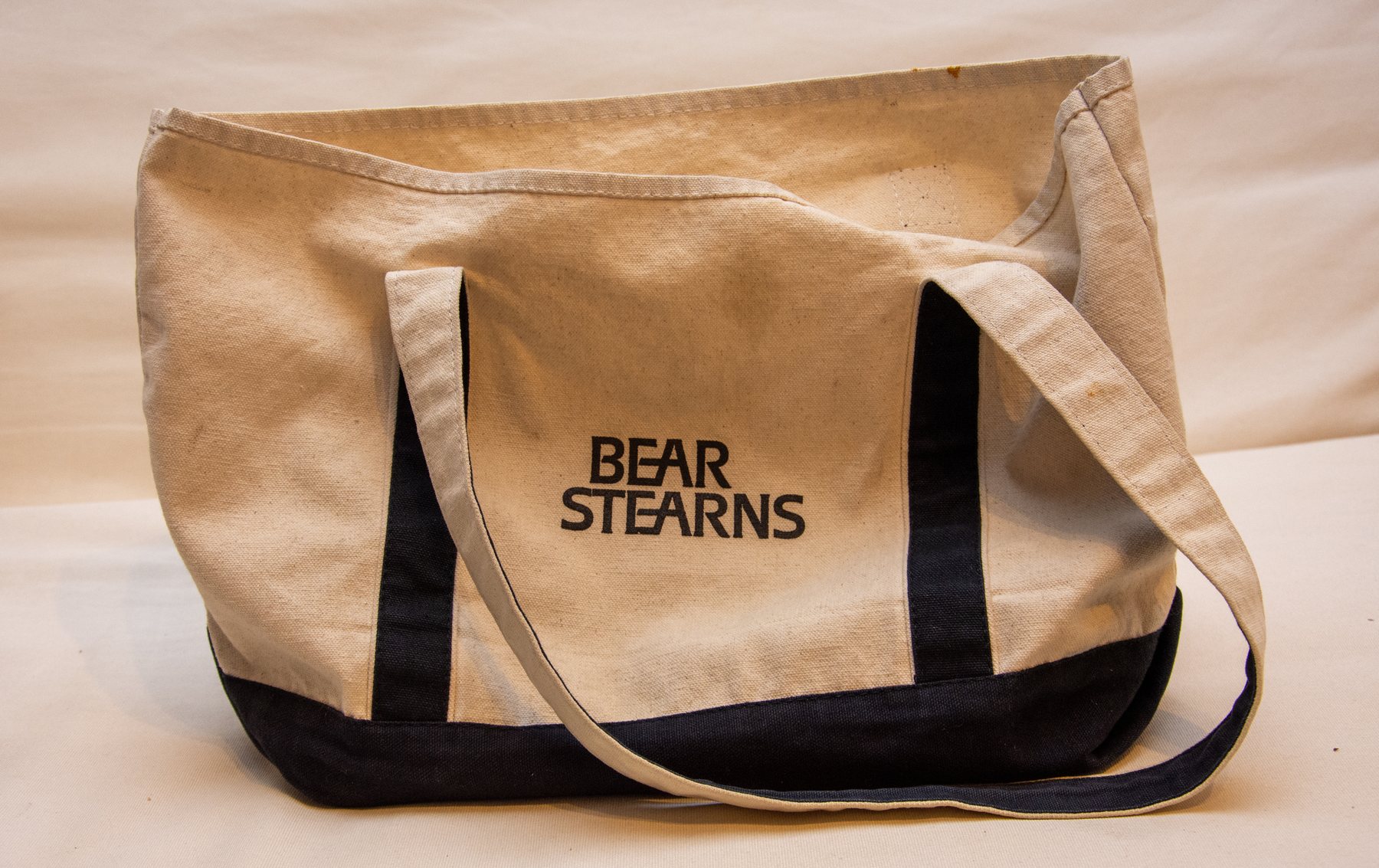
Part of the portfolio since 05/2013
This beautiful canvas tote was donated to the museum in 2013, well after the financial crisis of 2008/2009 – by which point its former owner had presumably stopped carrying it around Midtown Manhattan. Sturdy stitching, navy trim, a confident serif logo. The bag survived. The bank did not.
Bear Stearns was one of the first big banks to go under in 2008. Founded in 1923 with half a million dollars of capital, it made it through the Crash of 1929 without laying off a single employee and grew into one of the big Wall Street investment banks, with more than 15,000 people and a shiny tower at 383 Madison Avenue. Its specialty was the bond and mortgage machine: buy loans, package them, slice them, sell them, and keep a healthy helping for yourself.
Summer 2007: the canaries. Two in-house hedge funds stuffed with leveraged subprime securities ran into trouble. In June 2007 Bear pledged up to $3.2 billion to prop up one of them; by mid-July it had to tell investors that both funds were worth next to nothing. Their two managers were later charged with misleading investors – and were acquitted by a jury in November 2009. The funds, alas, could not be acquitted.
March 2008: the run. Banks die the way Hemingway described going bankrupt: gradually, then suddenly. In the second week of March, hedge funds pulled their money, counterparties stopped trading and lenders refused to roll over short-term funding. On Friday 14 March the Federal Reserve approved an emergency arrangement via JPMorgan Chase; the shares fell almost 50% that day to about $30. Over the weekend JPMorgan agreed to buy the whole firm for $2 a share – for a stock that had changed hands at well over $150 barely a year earlier. Furious shareholders (many of them Bear employees) forced a bump to $10, and the New York Fed took about $29 billion of toxic assets off the table in a special vehicle with the poetic name Maiden Lane. The deal closed at the end of May 2008; JPMorgan planned to keep fewer than half of Bear’s roughly 14,000 remaining employees.
Wall Street drew the comforting conclusion that the system had worked. Six months later, on 15 September 2008, Lehman Brothers filed for bankruptcy – and this time nobody showed up with a $2 offer. What followed was the Great Financial Crisis: AIG, Merrill Lynch, Washington Mutual, bailouts on both sides of the Atlantic, and a decade of zero interest rates that, in turn, filled several other rooms of this museum.
The lesson is old and still underpriced: leverage plus overnight funding means your survival depends on other people's confidence, and confidence has no notice period. A bank can be solvent on Monday and history by Sunday.
Museum note: the tote is in excellent condition and still carries more than the 2008 share price could. Have your own relic of the crisis lying in the attic? Do get in touch.
Further reading
- Wikipedia – Bear Stearns (ongoing)
- William D. Cohan – House of Cards: A Tale of Hubris and Wretched Excess on Wall Street (2009)
- CNN Money – JPMorgan scoops up troubled Bear (2008)
- Federal Reserve – Press release on the JPMorgan/Bear Stearns arrangement (2008)
- Federal Reserve Bank of New York – Maiden Lane transactions (2008)
- Andrew Ross Sorkin – Too Big to Fail (2009)
- Michael Lewis – The Big Short (2010)


