 Jesse Livermore
· 3 min read
Steinhoff; South African IKEA?
Part of the Portfolio since 2015 (yes! long before the drop!)
Steinhoff began in 1964 as an honest furniture business in Westerstede, Lower Saxony, founded by Bruno Steinhoff, and after a 1998 merger with a South African group came under the direction of Markus Jooste. Under him it metastasised into a sprawling global retailer: Conforama in France, Poco in Germany, Mattress Firm in America, Pepkor in South Africa, and a stake in seemingly everything that flat-packs. In December 2015 it moved its primary listing to Frankfurt and was feted as a German-South African champion, backed – and later chaired – by the billionaire Christo Wiese. The story was growth-by-acquisition. The reality was acquisition-by-storytelling.
On 5 December 2017 the wheels came off in the most modern way imaginable: the company announced “accounting irregularities”, its auditors at Deloitte would not sign off on the accounts, and Jooste resigned within hours. The share price did not so much fall as evaporate – 58 per cent in Frankfurt on the first day, almost 90 per cent within two weeks. Tens of billions of market value became a rounding error before the office Christmas party.
What PwC eventually found, after a fourteen-month forensic dig summarised in March 2019, was almost artistic. Between 2009 and 2017 fictitious and irregular transactions had inflated the group’s income by more than €6.5 billion (about $7.4 billion), booked with a small group of executives and a handful of friendly “third parties” who were not, on inspection, especially third. Revenue that never existed. Liabilities wearing the wig of assets. The furniture was real; the numbers were the flat-pack.
The losses were not abstract. The scandal wiped out much of Christo Wiese’s fortune and gouged the pension savings of millions of ordinary South Africans – the public funds holding what everyone had filed under “safe industrial blue-chip.” This is the part the museum does not find funny: the worthless share now in our cabinet was, for a great many people, a retirement.
The endgame dragged on for years, as these things do once the lawyers outnumber the assets. In 2022 a settlement pot of around R25 billion was arranged for claimants the corporate equivalent of a sympathy card. In 2023, with roughly €10 billion of debt outstanding, creditors – mostly hedge funds – agreed to a three-year repayment holiday in exchange for economic control of the group. On 13 October 2023, Steinhoff International Holdings was liquidated and delisted; shareholders were left with nothing but contingent value rights that pay out only after the creditors have been made whole. The shares, which had once touched R96.85, ceased to exist at around three cents.
Markus Jooste never reached a courtroom. German prosecutors in Oldenburg had reportedly charged him in 2020; South Africa’s Financial Sector Conduct Authority fined him R475 million for false and misleading statements. On 21 March 2024, one day after that fine was announced and shortly before he was due to hand himself over to the authorities, he died by suicide near his home in Hermanus. He had denied knowing of any wrongdoing before December 2017. The chief architect closed the file himself.
For the museum the moral is the oldest one, restated in Afrikaans and German at the same time: when a serial acquirer’s reported profits keep climbing while the cash mysteriously never arrives, you are not looking at a compounder. You are looking at a creative-writing department with a stock ticker.
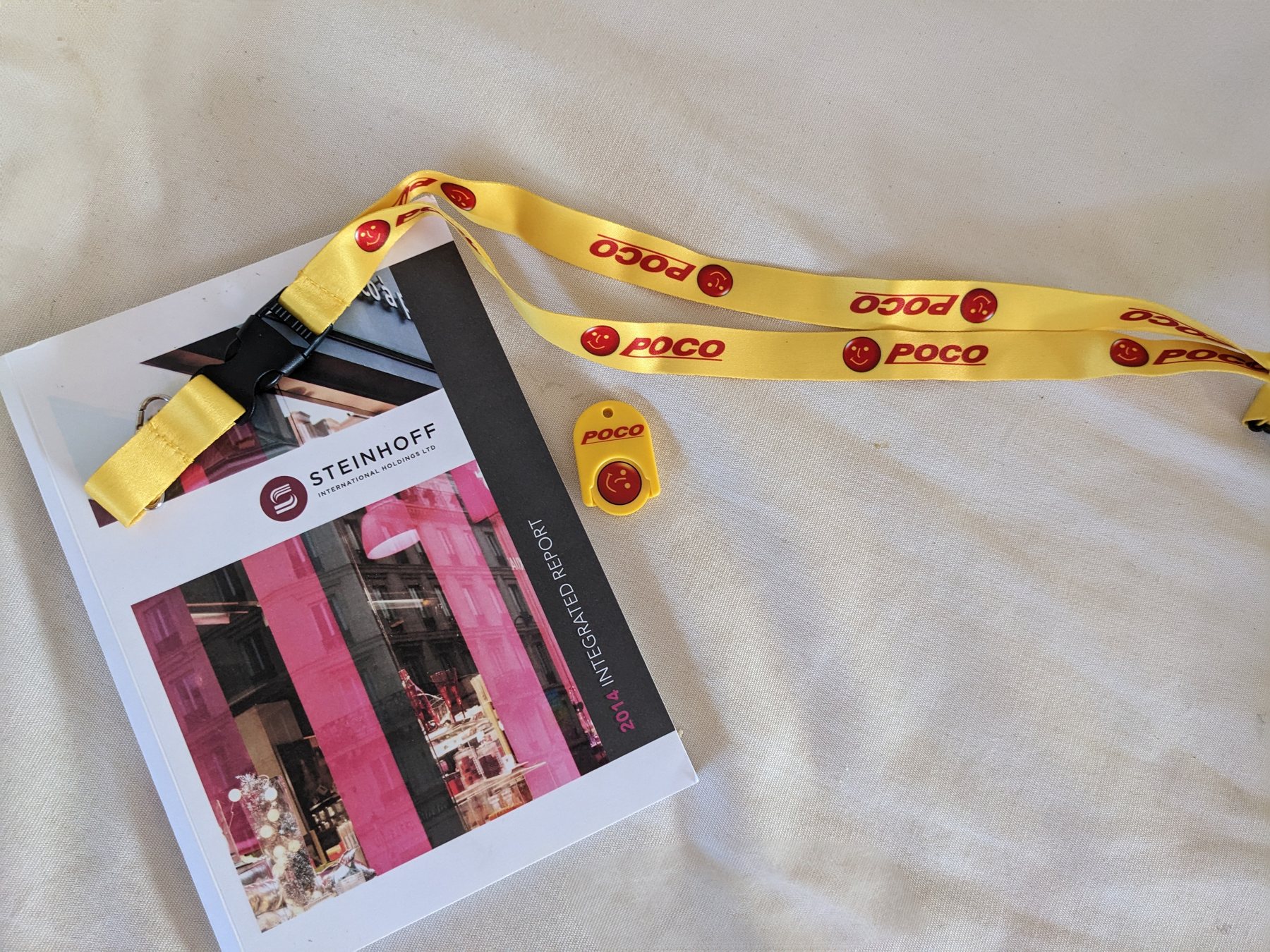
Museum note: IKEA, the company Steinhoff was so often compared with, has never been listed on any stock exchange. In hindsight, that may have been the most important difference.
Further reading
- Wikipedia – Steinhoff International (ongoing)
- Rob Rose – Steinheist: Markus Jooste, Steinhoff and SA’s Biggest Corporate Fraud (book review, LitNet) (2019)
- Mail & Guardian – Fictitious and irregular deals key to Steinhoff heist (2019)
- Bloomberg – Steinhoff deals come back to haunt retailer in PwC investigation (2019)
- Cape Argus – Steinhoff to be liquidated, will cease to exist (2023)
- Daily Investor – Bye bye Steinhoff (2023)
- Bloomberg – Ex-Steinhoff CEO Jooste dies day after he’s fined $25 million (2024)
- Wikipedia – Markus Jooste (ongoing)


