 Jesse Livermore
· 4 min read
Spagetti Cabonara... and una Coca Cola
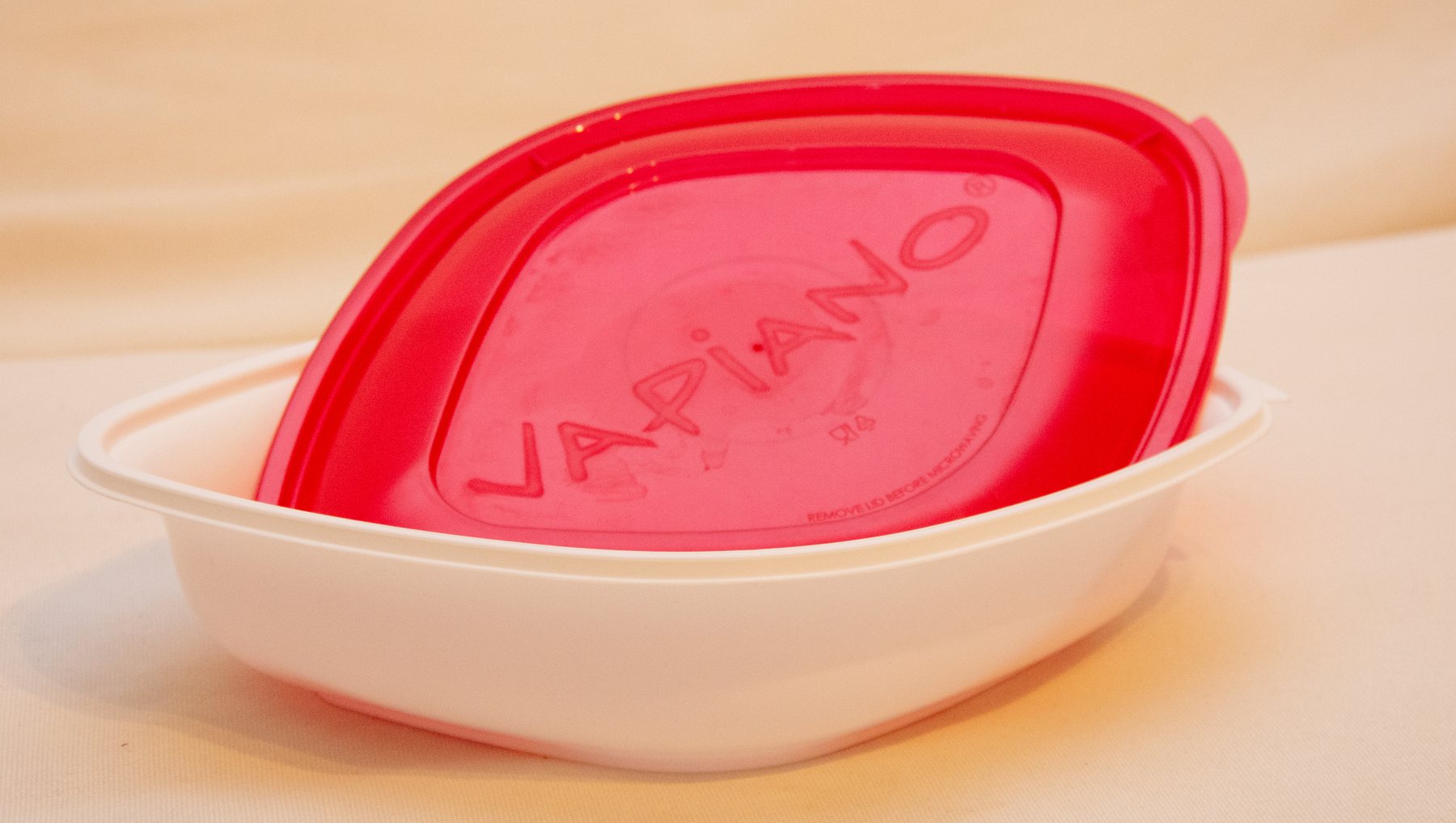
part of the portfolio since 2017
Quick-service restaurants and fast food can be really good businesses – and really good investments. Just think McDonald’s… Can’t you see the cash rolling in?
In truth: having a proven, working fast-food concept is a big thing. A standardised process can be scaled to hundreds of restaurants. When customers know and value a brand, it gives them peace of mind and they come back, often. The operating leverage is huge.
Vapiano started in 2002, when the first restaurant opened in Hamburg; the company later moved its headquarters to Cologne. The idea was an “Italian fast casual” concept with a good dose of show cooking.
It worked differently from a normal restaurant. Customers got a kind of chip card, queued at a counter in the kitchen area and had their meal prepared in front of them. One cook could do two dishes at a time, and usually two or three cooks were on duty.
I remember the first time I visited a Vapiano, in 2008/2009: good price/value, pasta freshly prepared in an open kitchen, pleasant surroundings.
Over time Vapiano opened more and more restaurants and exported the concept abroad. By 2016 the company had 179 restaurants in 30 countries, some run by franchisees, some company-owned. That year it did around EUR 250mn in sales and EUR 28mn in EBITDA – with a net profit of roughly zero.
Setting up a Vapiano did not come cheap. The kitchen ventilation alone was a big piece of capex, and a new restaurant could cost up to EUR 2.5mn. For a unit doing around EUR 3mn in sales and some EUR 500k in contribution, the place had to work properly for quite a while before the maths added up.
Berenberg (or Bubbleberg?), Barclays and Jefferies were the joint bookrunners. On 27 June 2017 they floated the business in Frankfurt’s Prime Standard at EUR 23 a share, a valuation of around EUR 550mn – close to 20x trailing EBITDA.
Roughly half of the proceeds went to the company to fund new restaurants, the other half to old shareholders cashing in. Growth requires capital – especially when every new outlet needs a huge and expensive ventilation system.
As a customer I became suspicious when prices crept upwards and upwards and price/value became less and less favourable.
A Spaghetti Carbonara that cost around EUR 5.50 in 2010 came in at around EUR 9.75 in January 2020. Clearly some inflation.
On top of that, the queue seemed to get longer with every visit, and there always seemed to be a shortage of cooks. (And those lunchtimes when everybody rushes in at once are, surprisingly, the same every day.) I was not the only one feeling the blues (link).
Some time after the IPO it became clear that the hyper-scaling had its problems. The chain had opened unprofitable locations, and the concept did not work everywhere the way it did at home in Germany.
Until August/September 2018 the stock mostly went sideways.
But little more than a year after the IPO the music stopped. First the company announced that it had to revise its outlook for 2018, blaming the hot summer. The stock went from EUR 18 to EUR 6 within a couple of weeks.
Then came 23 October 2018. Old shareholders – the same people who had sold part of their holdings at the IPO – put in another EUR 20mn at EUR 10 a share, while the stock was trading at EUR 6. Something was obviously wrong: they needed cash, and fast (article at the time).
A long series of guidance cuts, restructurings and management changes followed. For 2018 Vapiano reported revenue of EUR 372mn and a net loss of EUR 101mn, with impairments on the newer restaurants and net debt up to EUR 174mn; the annual report was delayed while the banks were negotiating. In August 2019 CEO Cornelius Everke stepped down. Then 2020 and Corona hit. With nearly all restaurants in lockdown, the company stood no chance. It announced its insolvency in March 2020; proceedings opened at the Cologne court in April.
The brand itself survived. In June 2020 a consortium led by former Vapiano board member Mario C. Bauer bought the German business out of insolvency – reportedly around 30 restaurants – with the promise to become “smaller but more powerful”. Today’s Vapiano brings the food to your table and serves pinsa instead of pizza. The shareholders of Vapiano SE, however, were left holding the chip card.
I do have mixed feelings: the original Vapiano concept was pretty good price/value. But they overstretched, and this “emotional short” worked out with a decline of close to 100% since the IPO.
Another long read on the topic: Finanz-Szene
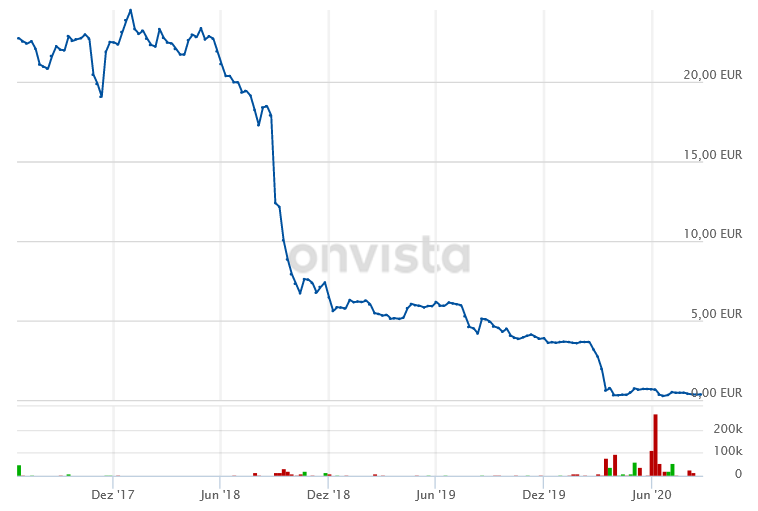
Museum note: the carbonara went from EUR 5.50 to EUR 9.75; the share went from EUR 23 to nothing. Only one of the two had pricing power.
Further reading
- Finanz-Szene – Berenberg, Barclays und der „Fall Vapiano“: Anatomie eines Desasters (2019)
- Wikipedia – Vapiano
- Deutsche Börse – IPO of Vapiano SE in the Prime Standard (2017)
- Tageskarte – Vapiano macht mehr als 100 Millionen Euro Verlust (2019)
- Tageskarte – Vapiano-Chef Cornelius Everke tritt zurück (2019)
- DGAP – Vapiano ad hoc: Eintritt der Zahlungsunfähigkeit (2020)
- Abendzeitung (dpa) – Investor: Vapiano schafft Comeback (2020)


