 Jesse Livermore
· 3 min read
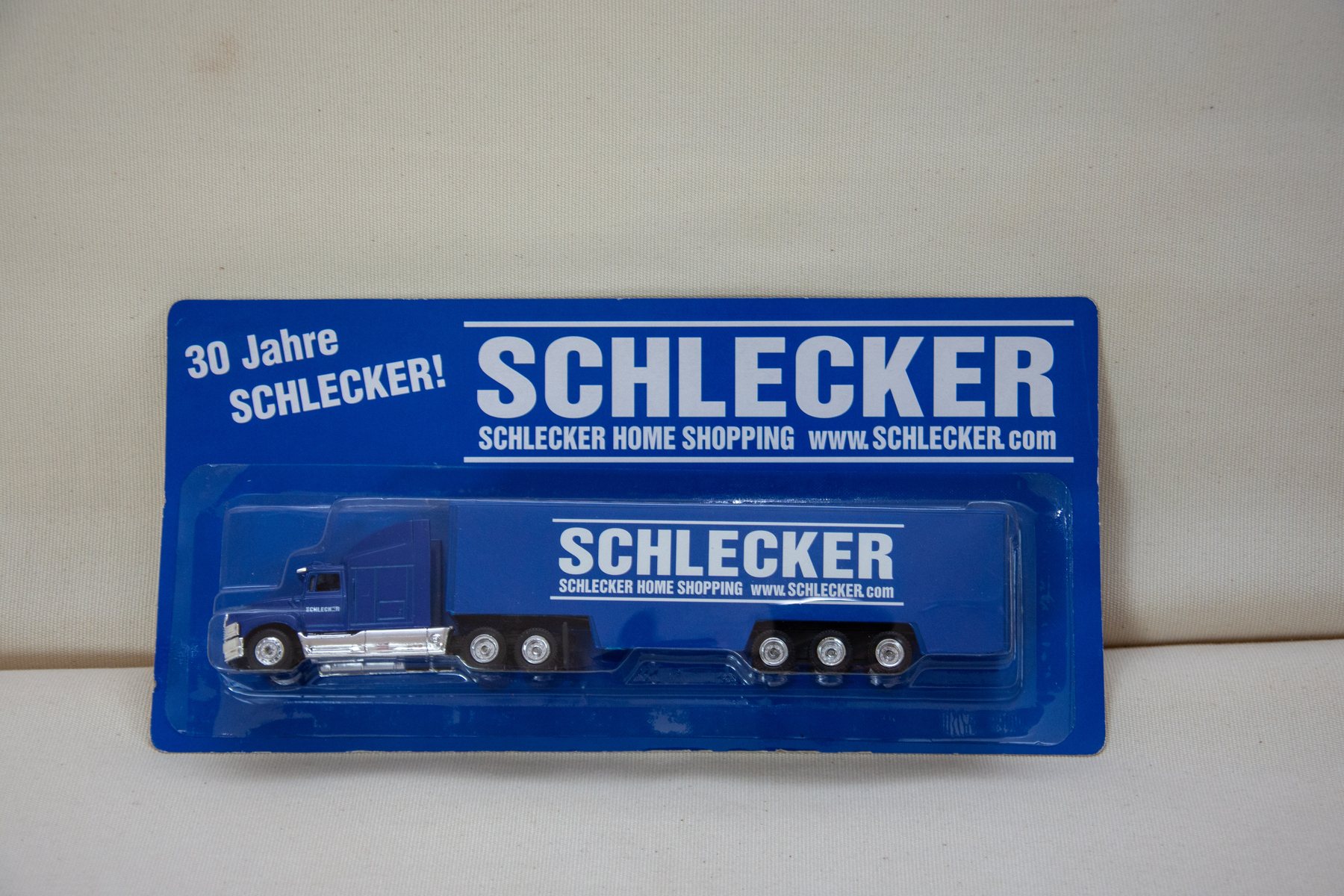
Schlecker: King of Heilbronn
Part of the Portfolio since 2015
For decades Anton Schlecker ran the largest drugstore chain in Germany, and one of the largest in Europe. From his headquarters in the Swabian town of Ehingen on the Danube, he opened his first drugstore in 1975 and then simply never stopped opening them. At its peak around 2008 the empire counted roughly 14,000 stores across Europe and some 50,000 employees, overwhelmingly women – the famous “Schlecker-Frauen” who staffed the cramped little shops on seemingly every German corner. In 2007 it held well over a third of the German drugstore market.
It was a genuine retail colossus, and it vanished with startling speed. The museum’s favourite structural detail comes first, because it explains so much of what followed. Schlecker ran this enormous business not as a public company, nor even as a GmbH, but as “Anton Schlecker e.K.” – a registered sole trader (eingetragener Kaufmann), carrying unlimited personal liability.
A chain of fourteen thousand shops, owned by one man who was personally on the hook for all of it, apparently to keep the books private and the control total. It is a decision that looks like supreme confidence right up until the moment it looks like something else.
The shops themselves were the strategy’s weakness made physical: small, dim, sparsely staffed, and run with a famous parsimony that produced years of bitter labour disputes. As early as 1998 a Stuttgart court gave Anton and his wife Christa suspended sentences for deceiving staff about pay. For a long time none of it mattered, because there was no better option. Then there was.
dm and Rossmann reinvented the German drugstore – bright, spacious, well-stocked, pleasant to shop in and decently run for staff. Against them, Schlecker’s thousands of gloomy little outlets suddenly looked like exactly what they were. The belated response – a dash to convert to bigger “XL” stores – arrived too late and merely accelerated the cash burn.
On 23 January 2012 the inevitable arrived: the company filed for insolvency at the local court in Ulm. Administrator Arndt Geiwitz closed around half of the German stores within weeks, a state-backed transfer company to catch the dismissed staff collapsed when the federal states could not agree, and the search for an investor failed. By the end of summer every store had closed and tens of thousands were out of work – a social shock in Germany, where the “Schlecker-Frauen” became a national shorthand for precarious retail labour. dm and Rossmann posted double-digit growth that year. Retail abhors a vacuum.
The legal epilogue was severe and very German in its thoroughness. On 27 November 2017 the Stuttgart Regional Court convicted Anton Schlecker of intentional bankruptcy (Bankrott), handing him a two-year suspended sentence and a fine of €54,000. His children Lars and Meike received prison terms of just under three years, for offences including breach of trust and delaying the insolvency of the family’s logistics company, which had paid them a €6.1 million profit distribution three days before the filing. In 2019 the Federal Court of Justice trimmed their sentences slightly but upheld the verdicts. The unlimited-liability sole trader had, in the end, been held very personally responsible indeed.
Museum note: in the end, the liability was the only thing about Schlecker that turned out to be truly unlimited.
Further reading
- Wikipedia – Schlecker
- Wikipedia (German) – Schlecker, with a detailed insolvency timeline
- Legal Tribune Online – Schlecker trial: suspended sentence for Anton Schlecker (2017)
- t-online – Schlecker verdict: probation for the father, prison for the children (2017)
- t-online – Federal Court of Justice rejects the Schlecker children’s appeal (2019)
- Wikipedia – dm-drogerie markt


