 Jesse Livermore
· 2 min read
Put a name to the Bubble: ARK Invest
Part of the portfolio since 09/2020
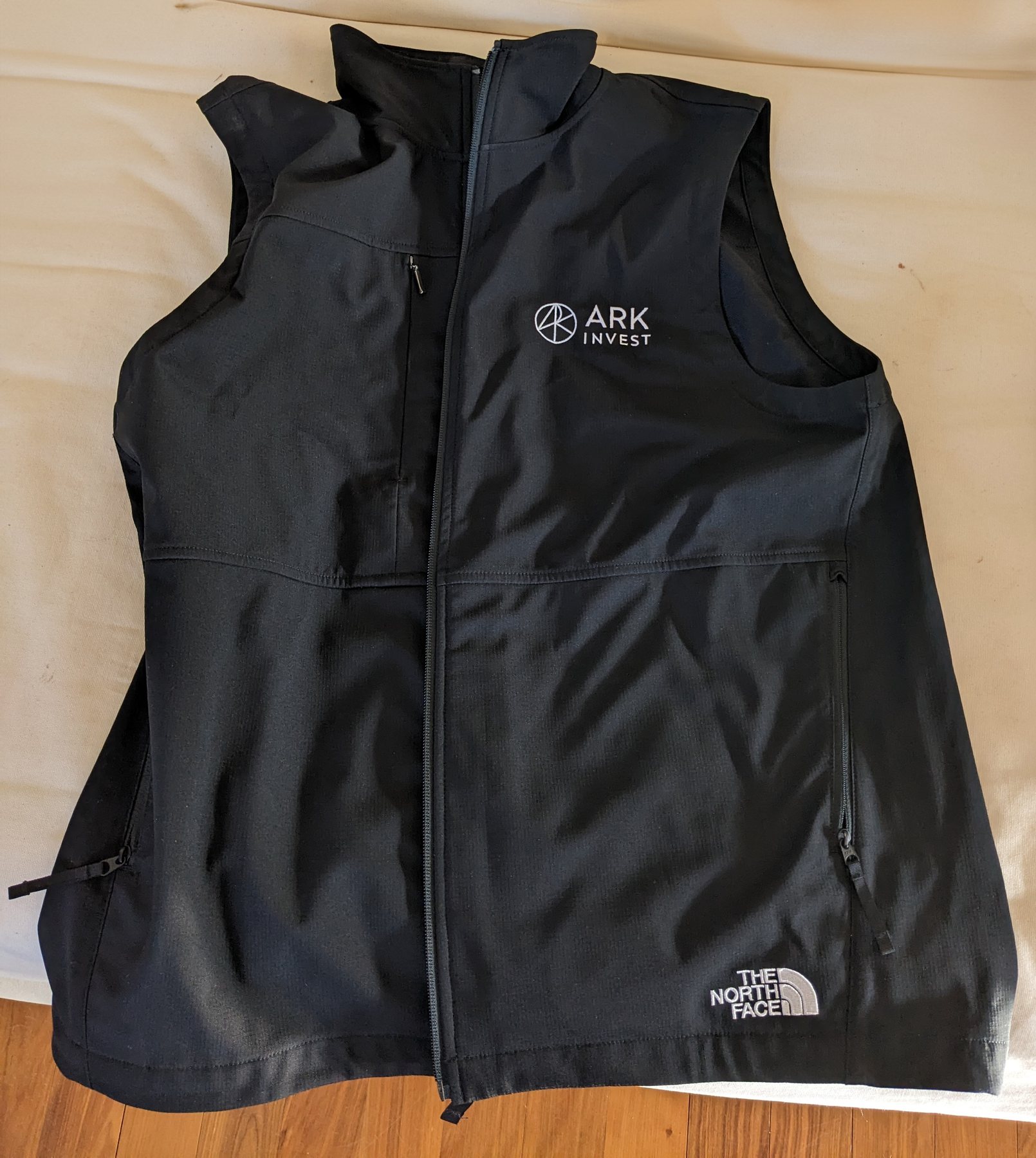
Every bubble deserves a face. The 1630s had tulips, 1999 had the sock puppet, and the zero-interest-rate mania of 2020/21 had Cathie Wood and her disruptive-innovation ETFs. Our exhibit is the official uniform of the era: a black North Face fleece vest with a discreet ARK Invest logo on the chest. It entered the collection in September 2020 – just as the party was getting loud.
The idea. Wood, a long-time growth investor, left AllianceBernstein in 2014 after her employer judged an actively managed ETF betting on “disruptive innovation” too risky. She launched ARK the same year – the name nods to the biblical Ark of the Covenant – and offered something no stock picker had done before: complete transparency. Every trade was published daily, along with bold five-year price targets for Tesla, genomics and bitcoin. Retail investors loved it. Wall Street rolled its eyes, then copied the marketing.
The boom. Then came Covid, stimulus cheques, free trading apps and money that cost nothing. The flagship ARK Innovation ETF (ARKK) roughly quadrupled from its pandemic low, and by December 2020 it was the largest actively managed ETF in the world. At the peak in February 2021, assets had swollen to almost $28 billion, up from about $2 billion in less than a year. Most of that money, naturally, arrived near the top. Fund flows are a lagging indicator with excellent timing.
The bust. When inflation returned and interest rates rose, the long-duration dreams were repriced at the speed of a margin call. By December 2022 ARKK was down almost 80% from its peak. Profitless tech turned out to be very sensitive to the price of money, and a fund that buys more of what is falling found plenty to buy. In early 2024 Morningstar crowned ARK the leading “wealth destroyer” among ETF issuers: an estimated $14.3 billion of shareholder value lost in the decade to 2023, about $7.1 billion of it in ARKK alone. Morningstar measures what investors actually lost in dollars – and they, buying high and selling low, had lost plenty.
Wood never wavered. She kept the conviction and the price targets (bitcoin at $1 million by 2030, anyone?). And fairness demands a footnote: in 2025, with AI and crypto back in fashion, ARKK staged a comeback and Morningstar listed it among the best-performing ETFs of the year. The story is, as the original stub of this post put it, ongoing.
The lesson is not that innovation is a bad investment. It is that a great story bought at any price is just a story – and that the investor's return and the fund's return can be two entirely different numbers.
Museum note: the vest has outperformed most ARKK buyers of 2021. It has never lost 78% of its warmth. Got a souvenir from another bubble? Tell us via the contact page.
Further reading
- Wikipedia – ARK Invest (ongoing)
- Wikipedia – Cathie Wood (ongoing)
- Morningstar – 15 Funds That Have Destroyed the Most Wealth Over the Past Decade (2024)
- Reuters via Investing.com – Ark Investments tops Morningstar list of wealth-destroying ETF issuers (2024)
- Advisor Perspectives – ARKK Stocks Sunk (2022)


