 Jesse Livermore
· 3 min read
HomeToGo - Knocked Out of Your Socks
Exhibit: a pair of white “home to go” socks, size 43–46, patterned with little holiday homes, bicycles and suns – a recent acquisition.
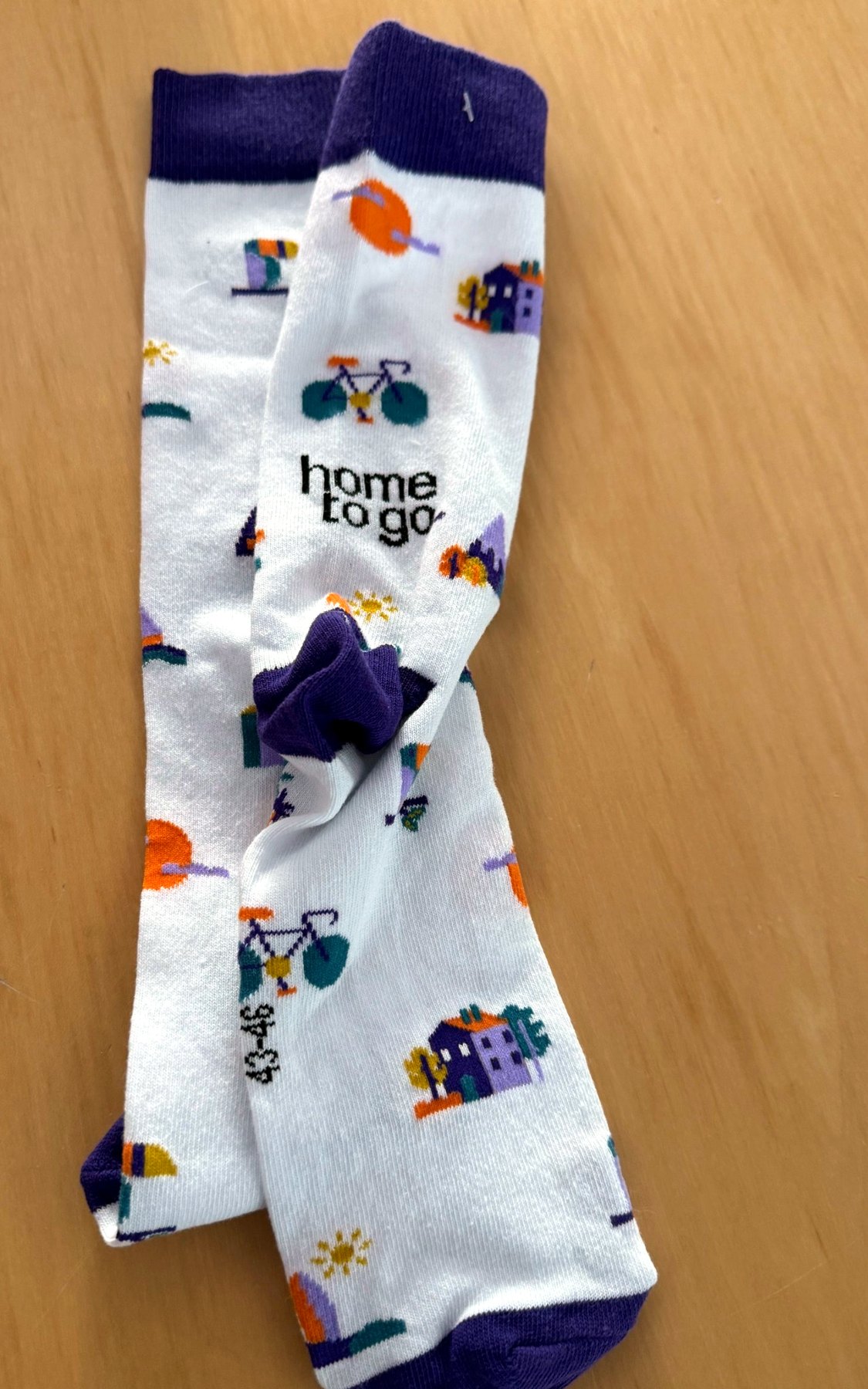
Most corporate merchandise is a pen. HomeToGo gave the world socks – which is fitting, because its shareholders have since been knocked clean out of theirs.
HomeToGo was founded in Berlin in 2014 by Patrick Andrae, Wolfgang Heigl and Nils Regge as a search engine for holiday rentals: type in “cottage, Baltic, August” and it trawled thousands of providers for you. In other words, a metasearch – the same trade, with the same landlord, as the museum’s Trivago exhibit. A metasearch owns no beds; it rents attention, overwhelmingly from Google, and resells it as clicks. The founders knew the genre well – Heigl had built the flight search Swoodoo, later sold to Kayak.
In 2021 the company took the fashionable shortcut to the stock exchange. Instead of an IPO it merged with Lakestar SPAC I, a Frankfurt-listed blank-cheque vehicle sponsored by the venture investor Lakestar – the first deal of its kind in Germany, valuing HomeToGo at about €1.2 billion and bringing in roughly €250 million of fresh money. Shares started trading in September 2021 at the SPAC’s customary €10. The pitch was the classic SPAC triptych: a huge fragmented market, a tech platform, and a path to profitability shown in a deck rather than a set of accounts.
The path turned out to have more switchbacks than advertised. By 2023 the shares were changing hands at around €2–3. Management, to its credit, did not sit still. It pushed the business from metasearch towards a marketplace with “onsite” bookings, where HomeToGo takes the booking and the commission instead of forwarding the guest. It bought its way across Europe – Wimdu, Casamundo, Smoobu, e-domizil, atraveo and others – and built a B2B arm, HomeToGo_PRO, selling software and services to hosts. In September 2023 it announced a buyback of up to €10 million; by the end of 2024 it had actually spent about €2.4 million, at an average of €2.11 a share. It also became main sponsor of the Bundesliga club 1. FC Union Berlin, which is at least a cheaper billboard than a search engine.
Then came the big one. In February 2025 HomeToGo agreed to buy Interhome from Migros – Europe’s second-largest holiday-rental manager, with about 40,000 homes – for CHF 150 million upfront plus up to CHF 85 million deferred. To pay for it, it placed 53.1 million new shares at €1.60, roughly a 42% increase in the share count, plus bank debt and later a Nordic bond. The deal closed in August 2025, and the former search engine now earns most of its revenue in the B2B segment, much of it managing other people’s chalets. The cleverest reading: if you cannot stop paying Google for guests, at least own the houses they sleep in.
The numbers now look like a different company. For 2026 HomeToGo guides to IFRS revenue of €400–410 million and adjusted EBITDA of €45–47 million; first-half free cash flow was €48 million. The adjective “adjusted” is doing its usual quiet work, and the first half itself still showed an adjusted EBITDA loss of €15 million, holiday homes being a summer business. The market is unmoved. By late September 2026 the shares were down almost half for the year, and the old SPAC warrants expired worthless. In mid-October 2026 the stock trades around €0.70 – a market value of roughly €125 million, about a tenth of the 2021 valuation, for a company now twice the size.
Museum note: the socks are size 43–46, one size fits most. The SPAC valuation, it turned out, fitted nobody.
Further reading
- Wikipedia – HomeToGo (ongoing)
- Reuters – Lakestar SPAC to acquire HomeToGo in first German deal of its kind (2021)
- HomeToGo – Definitive agreement to acquire Interhome and accelerated bookbuild (2025)
- PhocusWire – HomeToGo to acquire vacation rental manager Interhome (2025)
- HomeToGo – Updated FY/25 guidance following Interhome closing (2025)
- HomeToGo – Share buyback programme 2023–2024 (2025)
- Goldesel – HomeToGo Q2 2026 results, guidance confirmed (2026)


