 Jesse Livermore
· 4 min read
Cybits Holding AG - The German "Mantelgesellschaft"
Part of the Portfolio since 2012
A peculiar speciality of the German market is the so-called Mantelgesellschaft – literally a “coat company”, in English a shell. There is an abundance of old, essentially defunct, worthless companies whose shares nevertheless live on, like a coat still hanging in the cloakroom long after its owner has left the party.
Much like the SPACs that became so fashionable in the US, these shells are now and then used to re-list or recapitalise other businesses. Someone slips into the old coat, and off it goes again.
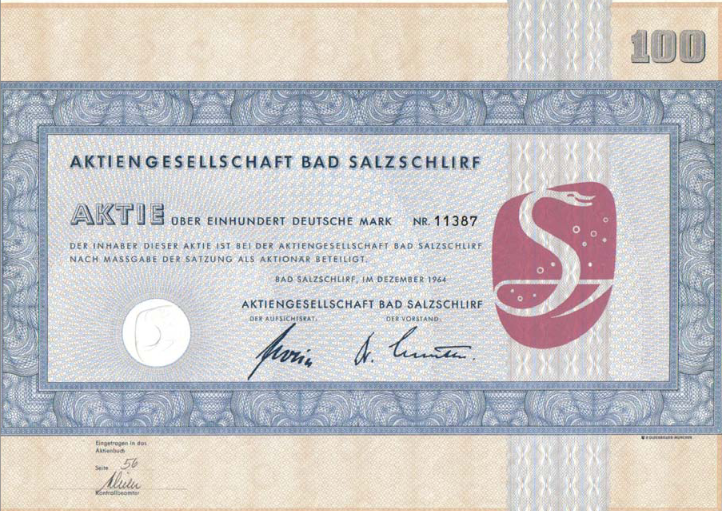
One of the most famous of the last twenty years is certainly the “Aktiengesellschaft Bad Salzschlirf”, founded in 1900, which had a second life as Arques Industries.
That is a story of its own. Arques Industries, a turnaround investor, went from a share price of around EUR 2 in 2004 to EUR 40 in 2007 and then reversed to essentially zero again. In 2011 it gave up buying ailing companies and renamed itself Gigaset, after the former Siemens cordless-phone business it owned – which in turn filed for insolvency in September 2023. One spa, three lives, no happy ending. (Unfortunately the Kapitalmarkthygienemuseum has no Arques memorabilia – yet.)
As these shells are revitalised, huge price swings in the “living dead” are not unusual.
Another shell was the former Sinalco AG. Sinalco – from the Latin sine alcohol, “without alcohol” – is a German soft drink created in the early 1900s and named in 1905 through a public competition. The founding family lost control at the start of the 1970s, when the company passed to the Dortmund brewing world, and the ownership merry-go-round began. The brand went one way (today it belongs to a drinks group in Duisburg); the listed company went another. After an odyssey of renamings and changes of ownership (SIBRA Holdings in the early 1980s, Detmolder Beteiligungs AG in 1998), the shell was acquired by the (infamous) WCM AG in the nineties and sold to the (infamous) IVG Immobilien AG around the turn of the century.
IVG reported in 2001 that it had sold its 80% stake to “Star 21 Networks AG”. A few weeks later that deal fell apart. (IVG itself later found its own way into this museum’s orbit, filing for insolvency in 2013.)
In 2006 IVG finally sold the shell. The buyers were close to the (infamous) Florian Homm – the hedge-fund manager who vanished in 2007 as his Absolute Capital Management unravelled and was later charged with fraud by US authorities. At the AGM the shell was renamed “Reality Capital Partners”, which wanted to do big private equity and real estate. The plan: invest EUR 500 million and earn a “safe return of 15% ROE”… sure…
In November 2006 the company bought into an asset called “Cybits Security Systems GmbH”, paying EUR 1.3 million for a 15.4% stake. Later the shell was renamed “Cybits Holding AG” – its final name (so far).
Somehow they managed to merge the rest of Cybits Security Systems GmbH into the shell, and the company ended up with “Cybits” as its main operating asset.
Cybits had two segments:
1) Identification of customers in compliance with the German Money Laundering Act.
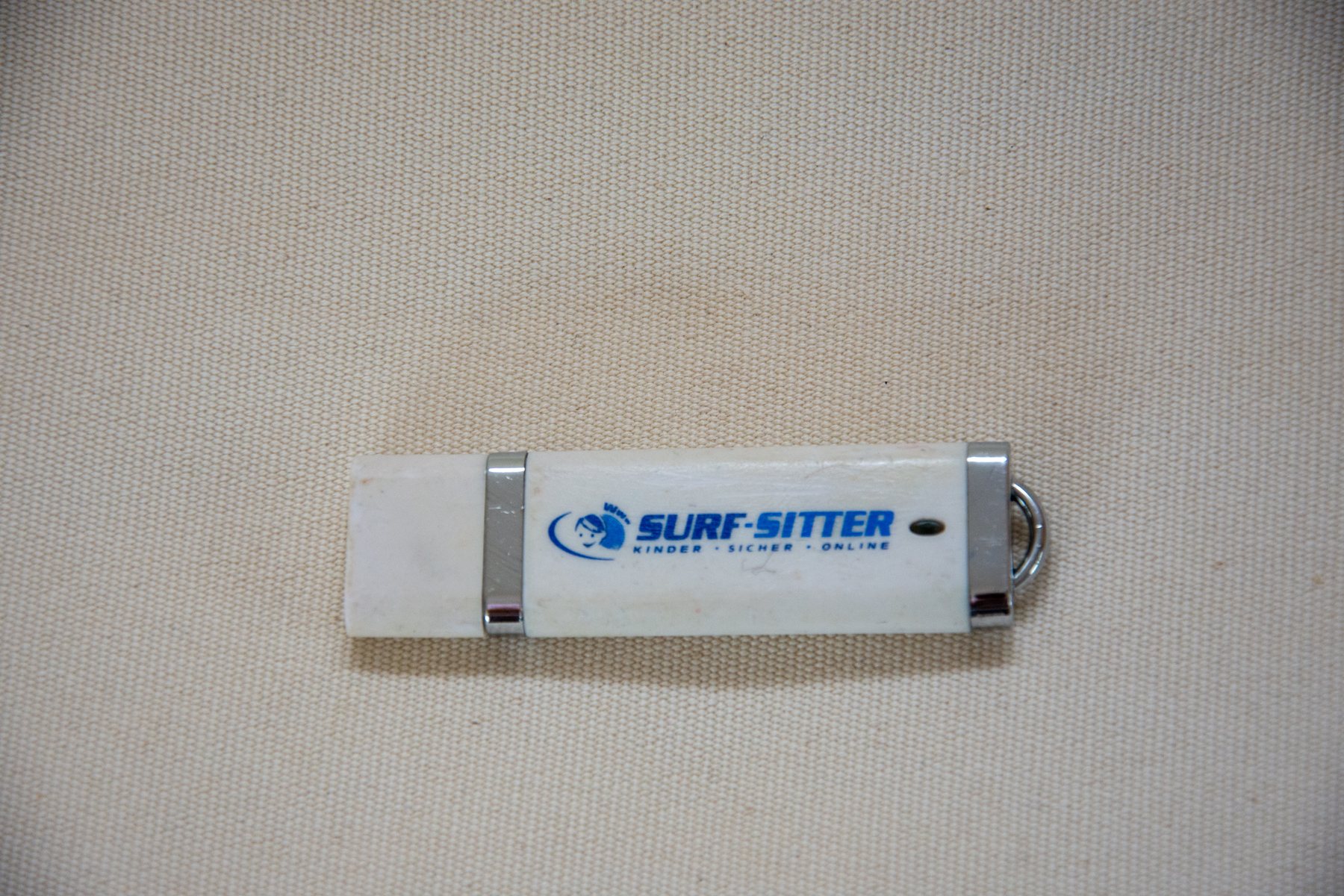
2) “SurfSitter – Kinder sicher online”: a filtering tool to manage children’s access to the internet.
The identification software was the main product. Germans opening a bank account usually identify themselves via a service provided by Deutsche Post called PostIdent: take your papers to the post office, queue, show your ID. The downside of offline PostIdent is a rather poor conversion rate – only around 50% of applicants follow the whole process through.
The idea at Cybits was to use the then red-hot secure e-mail standard De-Mail – which required a pile of accreditations – together with its distribution partner 1&1 / United Internet to establish its verification solution as the state of the art. The long game was five-minute online verification for all kinds of services, e.g. opening bank accounts.
They gained some traction with customers such as Maxdome (a sort of German Netflix, needing age verification) and Lotto24.
But they never landed any serious blue-chip customers, and no bank implemented the solution.
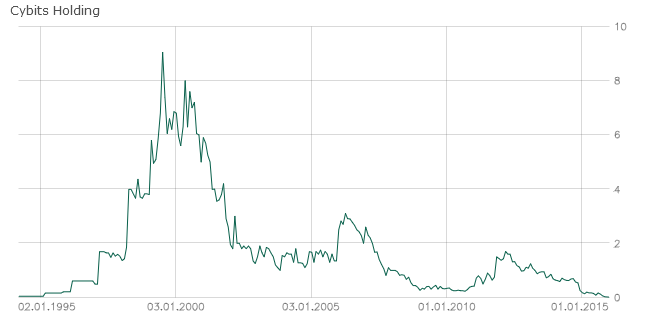
After a short “back to life” from 2010 to 2012 the company went under again. In April 2015 it announced that half of its share capital was gone; several supervisory board members had already resigned; and in early 2016 the shares were delisted. Let’s see whether this shell comes back to life some day.
History added two ironic footnotes. In 2015 – just as Cybits faded – Deutsche Post launched PostIdent by video chat, i.e. the quick online identification Cybits had been dreaming of. And De-Mail, the great hope, never caught on: Deutsche Telekom switched its service off in 2022, and 1&1’s went dark in early 2025. The idea was right; the coat just belonged to someone else.
The emotional short would have worked out with -100% from 2012 to 2015.
Museum note: a Mantel, as every German grandmother knows, should be checked for moths before you put it on.
Further reading
- Wikipedia – Gigaset (from AG Bad Salzschlirf via Arques Industries) (ongoing)
- Computerwoche – Arques benennt sich um in Gigaset (2011)
- Wikipedia (German) – Sinalco (ongoing)
- Wikipedia – Florian Homm (ongoing)
- 4investors – Cybits Holding news archive (2010–2015)
- Wikipedia (German) – De-Mail (ongoing)
- Wikipedia (German) – Postident (ongoing)


