 Jesse Livermore
· 3 min read
Asian Bamboo - growing like a weed.

Part of the portfolio since 11/2011
2007 was a good time for the market. The sky was the limit and money was easy.
At that time several Chinese companies (attracted by ... drum roll ... Deutsche Bank) used a German listing to raise equity.
Deutsche Bank pitched those listings with the promise of stupid German money, “better transparency” and a “higher standard of the German market” overall. Bull****.
One of the most successful companies was called Asian Bamboo AG. Headquartered in Hamburg, with operations in Fuzhou, China, it was a holding company bundling Chinese bamboo producers – and it was pretty popular for some time. Its shares started trading in the Prime Standard of the Frankfurt Stock Exchange on 16 November 2007, only the second IPO of a Chinese group on the Frankfurt exchange.

The story was pretty simple: bamboo grows like a weed and has multiple uses. The wood can be used for construction or for producing pulp and paper; the shoots can be eaten. This is all you need.
Over the years Asian Bamboo took in EUR 140mn by selling shares to the public in several tranches and “reinvested” those funds in Chinese bamboo plantations.
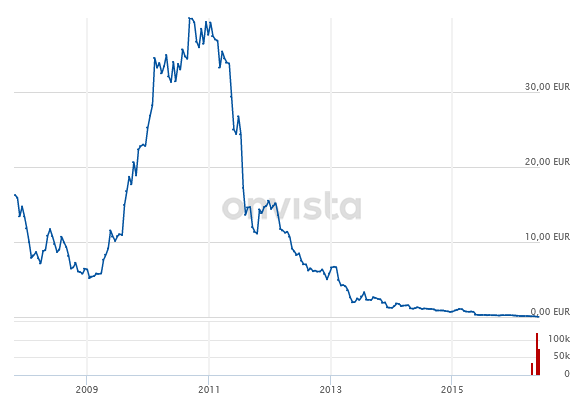
The stock was floated at around EUR 16 in 2007 and first went down 70% to EUR 5 by March 2009. What happened then is astonishing: Asian Bamboo convinced the market that it was a real and legitimate business. It bought plantations for EUR 43mn in 2008, EUR 51mn in 2009 and EUR 55mn in 2010.
Thanks to the accounting rules, the company could show a healthy rise in revenue and profits in those years. Under IAS 41, the growth of standing bamboo counts as profit long before anyone harvests, sells or gets paid for a single stalk – a plantation that grows on paper is a plantation that earns on paper. Revenues went from EUR 15mn in 2007 to EUR 90mn in 2011 and operating profit from EUR 7mn to EUR 37mn over that period. The stock price took off like a rocket and rose sevenfold. Market cap reached around EUR 500mn at the peak. Not too shabby!
There is a great series from spring 2011 on a highly respected blog (www.valueandopportunity.com) about the company, its business model and its accounting at the time. The first post proposed a modest short position, arguing that headline earnings were inflated by these biological-asset gains, that growth was financed by leases and constant equity raises rather than cash flow, and that the CEO was selling shares along the way. It is well worth reading – unfortunately in German only, so use a translation tool.
2) “Annual Report 2010 part 1 – wrong calculation of EPS growth”
3) “Annual Report 2010 part 2 – liquidity”
4) “Annual Report 2010 part 3 – biological assets”
5) “Annual Report 2010 part 4 – cash flow shenanigans”
7) “Some interesting details from the parent company report”
9) “Muddy Waters – parallels and differences”
On 2 June 2011 Carson Block’s Muddy Waters Research published a short report on a strikingly similar Chinese, Toronto-listed timber company called Sino-Forest (report), which had been worth some USD 5bn only months earlier. Sino-Forest’s shares fell 82%, the company sought creditor protection in March 2012, and in 2017 the Ontario Securities Commission ruled that it had defrauded investors. For anyone holding Chinese trees on a Western stock exchange, the report crushed all hopes of a recovery. After that there was only one direction: downhill.
After several years of diminishing returns – and a loss of around EUR 200mn for 2013 – the company changed its business model to “Chinese real estate” in 12/2013 and tried, unsuccessfully, to raise further capital. Even the auditor declined to judge the risks of the planned property deals. After a relatively short period of twitching and several departures of executives, creditors – among them the development lenders DEG and Proparco – petitioned for insolvency in early 2015, and Asian Bamboo filed its own application at the Hamburg local court in June 2015. The stock exchange listing was finally revoked in 2019, long after anyone was still watching.
This “emotional short” would have worked out pretty well, with a decline in the share price of 99% since November 2011.
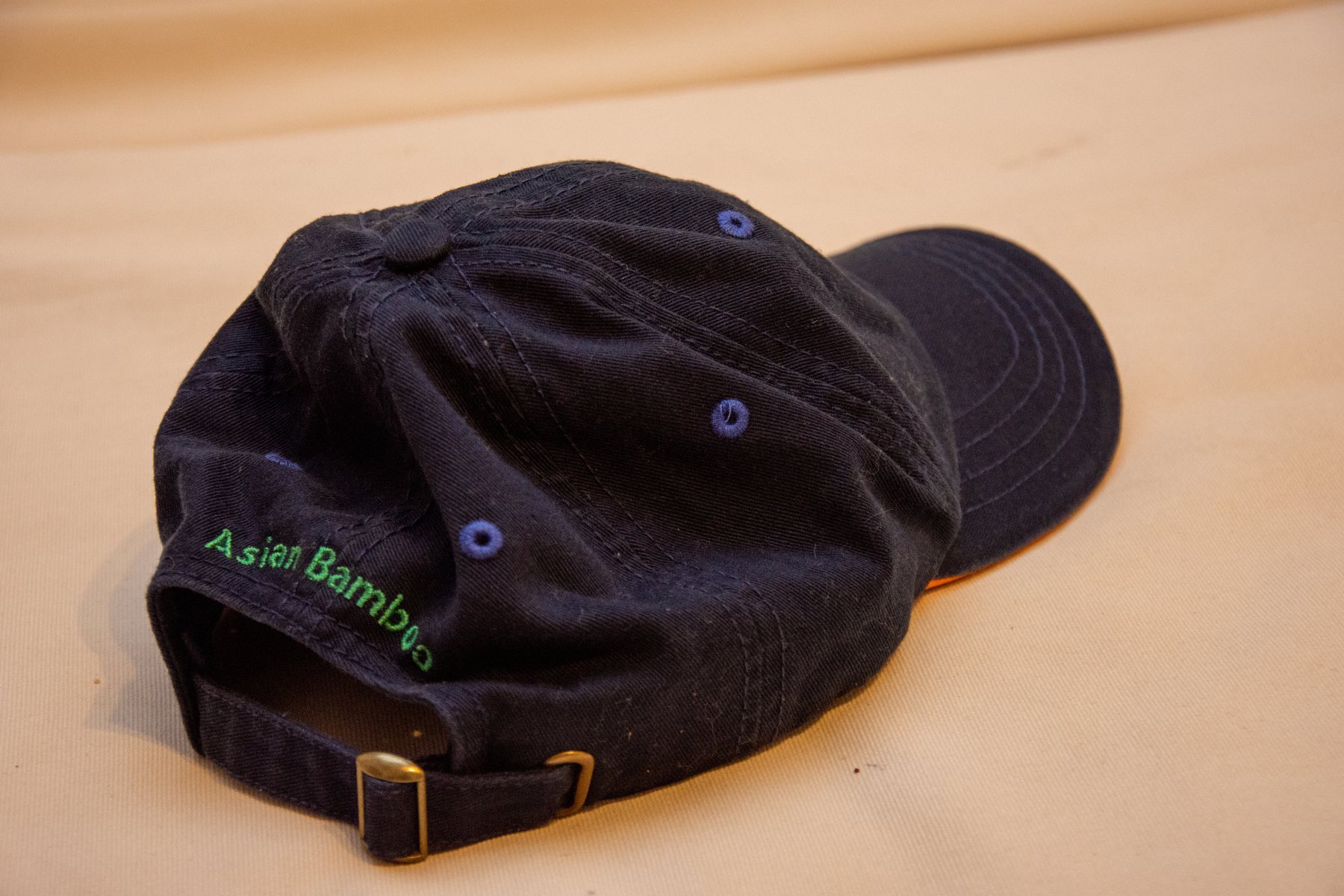
Museum note: bamboo really does grow like a weed – some species close to a metre a day. Only the cash flow never got the memo.
Further reading
- value and opportunity – Opportunistic Short: Asian Bamboo (German) (2011)
- Wikipedia (DE) – Asian Bamboo (ongoing)
- Wikipedia – Sino-Forest Corporation (ongoing)
- Investment Executive – OSC rules Sino-Forest defrauded investors (2017)
- Wikipedia – Muddy Waters Research (ongoing)
- CMS – Asian Bamboo, the second IPO by a Chinese group in Frankfurt (2007)


